A surfboard is a core (the foam or wood that gives it shape and float) wrapped in a skin (cloth and resin, or timber) that gives it strength. The combination you choose changes everything about how the finished board feels and how long it lasts. Design the shape once — in OpenShaper — then pick the build that suits it.
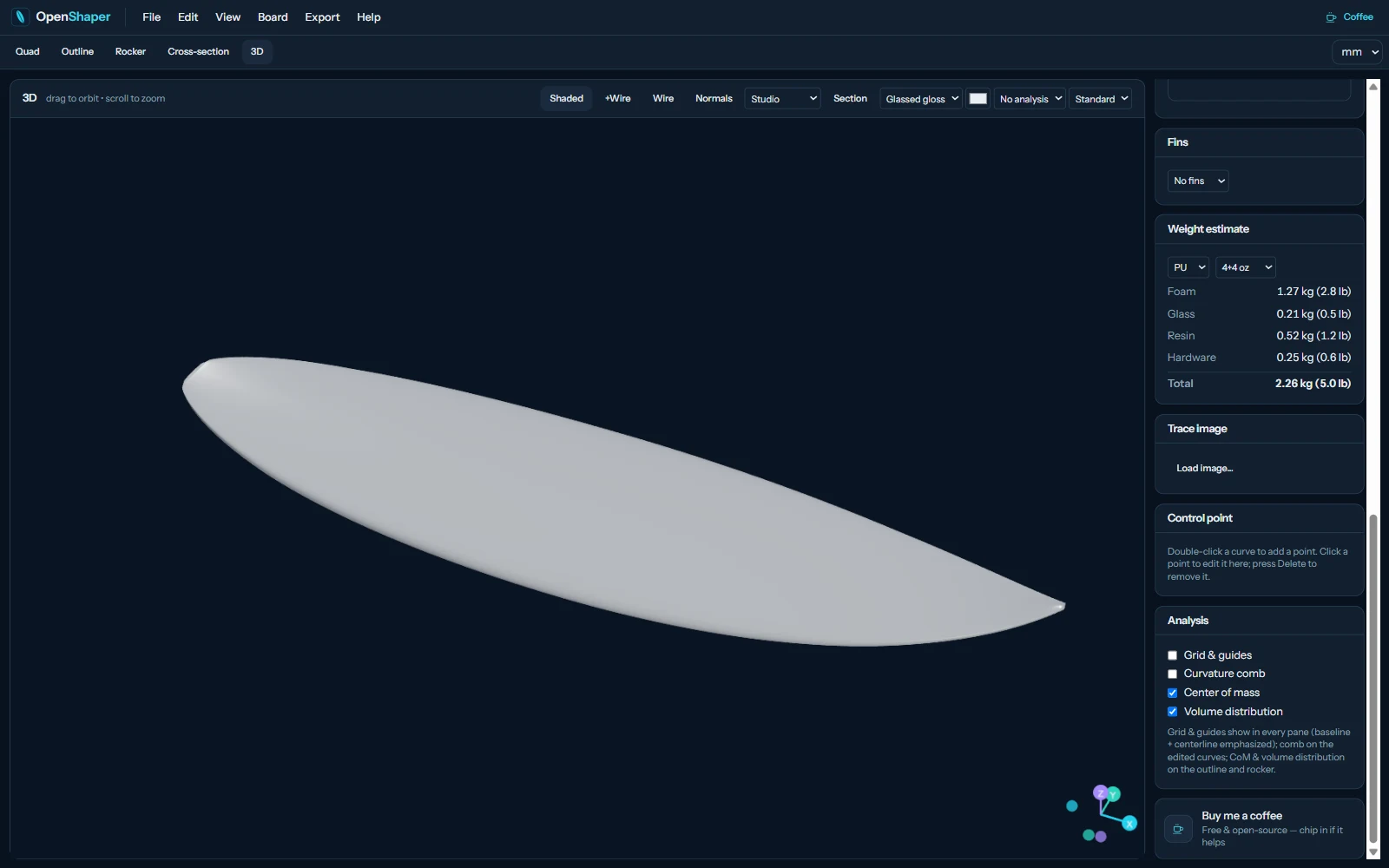
At a glance
| Method | Weight | Feel | Durability | Footprint |
|---|---|---|---|---|
| PU / polyester | Medium | Classic, planted | Moderate | Higher |
| EPS / epoxy | Light | Lively, buoyant | High | Medium |
| Soft-top (foamie) | Medium | Forgiving, muted | Moderate | Medium |
| Hollow wooden | Medium | Smooth, dampened | Very high | Low |
| Chambered wood | Heavy | Glidey, momentum | Very high | Low |
| Compsand / sandwich | Light | Stiff, strong | Very high | Medium |
PU / polyester (PU/PE)
The traditional surfboard: a polyurethane (PU) foam blank with a wooden stringer, hand-shaped and laminated with polyester resin over fibreglass cloth. It's what most boards have been made of for decades. PU/PE sits a touch lower in the water with a softer flex and a planted, predictable feel that many surfers love in quality waves. The trade-offs: it's a little heavier, dings and yellows more readily, and polyester resin has a heavier environmental footprint.
EPS / epoxy
An expanded polystyrene (EPS) core — a lighter foam of fused beads — laminated with epoxy resin. The pairing is chemistry, not choice: polyester resin dissolves polystyrene, so an EPS blank must be glassed with epoxy. EPS/epoxy boards are lighter, stiffer and more buoyant than PU/PE, which makes them lively and strong performers in smaller, weaker waves, and notably more durable. The flip side is a feel some surfers describe as skittish or “corky,” and because water can wick into the gaps between the beads, a dinged EPS board needs drying and repairing promptly. Epoxy is also more forgiving to build with at home than polyester.
Soft-top (foamie)
The surf-school staple: typically an EPS core with a soft foam deck and a slick plastic bottom in place of a hard glass job. Soft-tops are forgiving, safer in crowded line-ups, cheap and nearly maintenance-free — which is why almost everyone learns on one, and why many experienced surfers keep one as a small-wave novelty. The trade-offs: a flexy, muted feel, less precise rails, and dings that are hard to repair invisibly. Most are mass-produced in moulds rather than shaped from a custom design, though a soft glass job over a CNC-cut EPS blank is a real (if niche) custom option.
Hollow wooden (skin-on-frame)
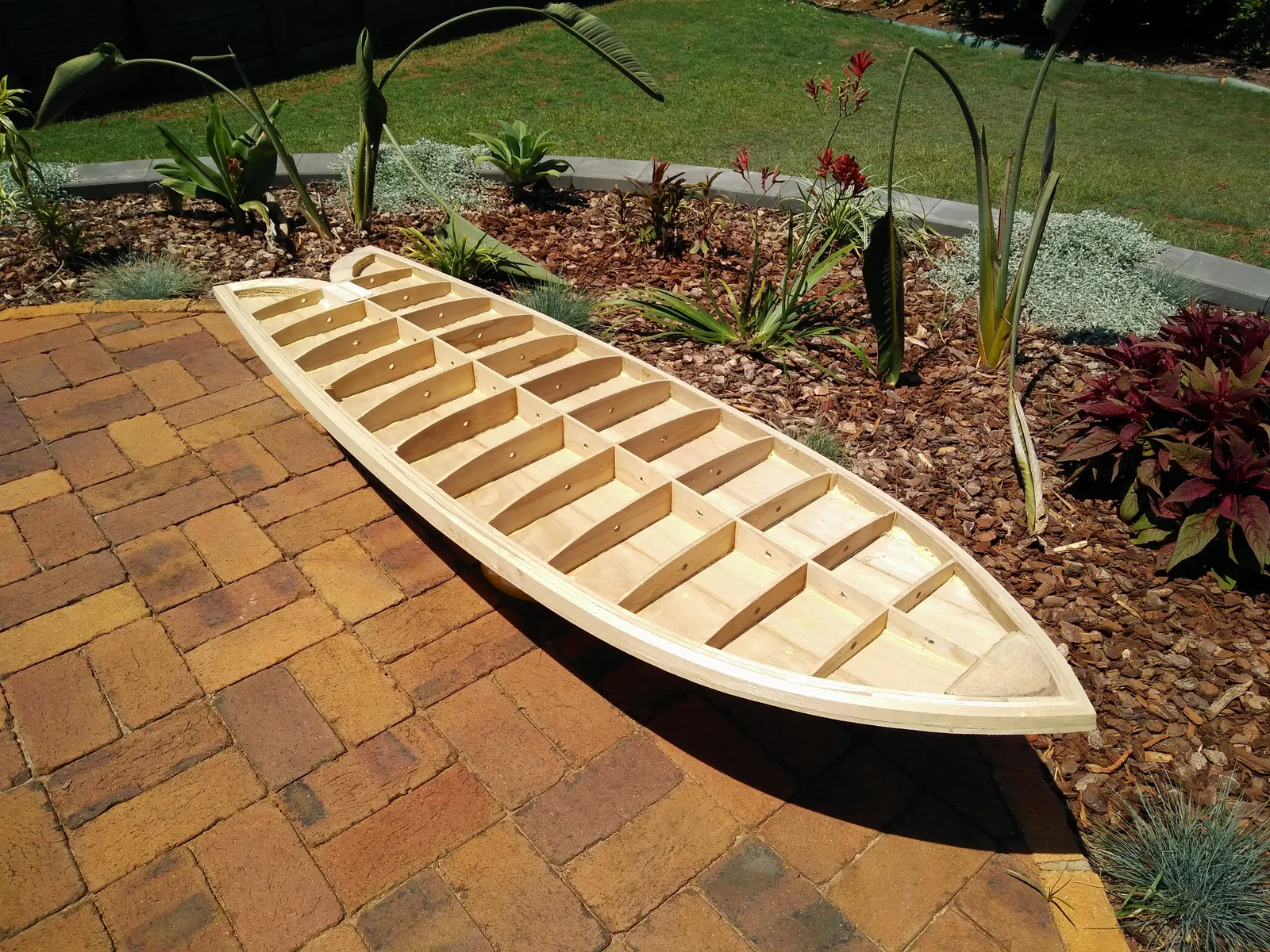
A timber take on aircraft construction: an internal frame of a perimeter rail and evenly spaced ribs, skinned top and bottom with thin wooden panels (Paulownia and cedar are favourites for their light weight). The result is a board that's far lighter than solid wood, extremely durable, and with a uniquely smooth, dampened flex. It's also one of the most sustainable ways to build — and the method that pairs best with CAD, because the ribs and rail are simply cross-sections and the outline cut from templates. This is how my own 5'8" Paulownia fish is built — there's a full hollow wooden surfboard build guide if you want to try it.
Chambered solid wood
Solid timber boards with the interior hollowed into chambers to shed weight before the halves are glued and shaped. Heavier than hollow skin-on-frame, they carry serious momentum and glide, look stunning, and last a lifetime — a labour-intensive, traditional craft more than an everyday performance build.
Compsand / sandwich
A composite “sandwich” construction: an EPS core skinned with a thin layer of timber or high-density foam between glass layers. Compsands are light, very strong and stiff, with a lively spring — popular with home builders chasing durability and a bit of wood aesthetic without a full hollow frame.
3D-printed cores
An emerging approach: a printed lattice or core (often then glassed) produced directly from a 3D model. Still niche and slower to make, but a natural fit for a CAD workflow — export an STL and the geometry is ready for the printer.
From CAD to a real board
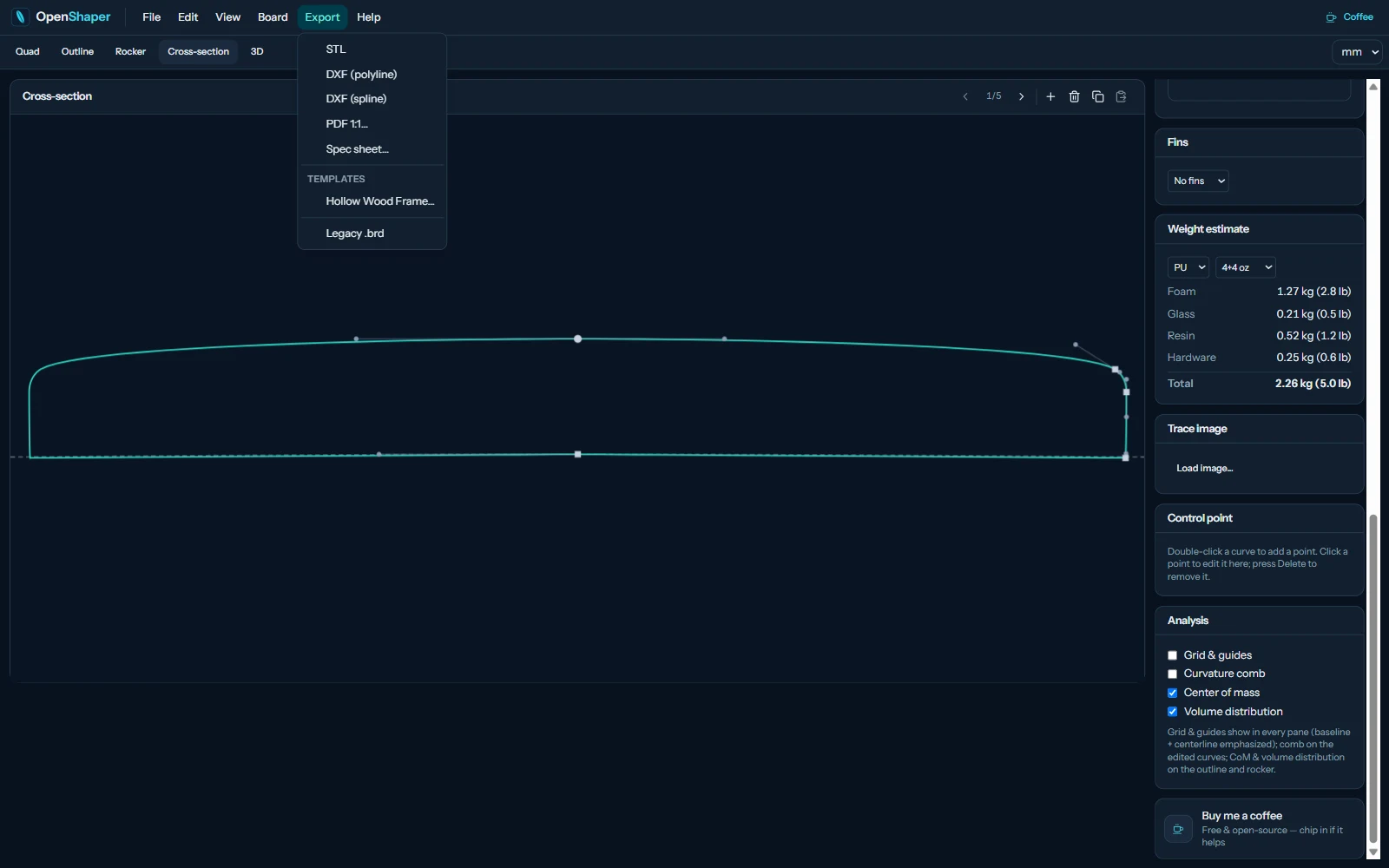
OpenShaper exports the three things a build needs, whatever method you choose:
- STL — a watertight 3D mesh for CNC machining a blank or printing a core.
- DXF — clean 2D outline and cross-section curves for cutting templates, ribs and rails.
- PDF — 1:1 printable templates and a spec sheet for hand-shaping.
If you're still deciding on a shape, start with the surfboard design guide. When the outline and foil are dialled, the export you need is one click away.
Frequently asked questions
EPS/epoxy vs PU/polyester — which is better?
Can I build a hollow wooden surfboard from a CAD file?
Are wooden surfboards heavier than foam ones?
Sources & further reading