A surfboard looks simple, but a shaper is juggling several curves at once: the outline you see from above, the rocker from the side, the rails along the edge, the foil through the thickness, and the bottom contours underneath. Get the blend right for a given surfer and wave, and the board comes alive. Below is what each element controls.
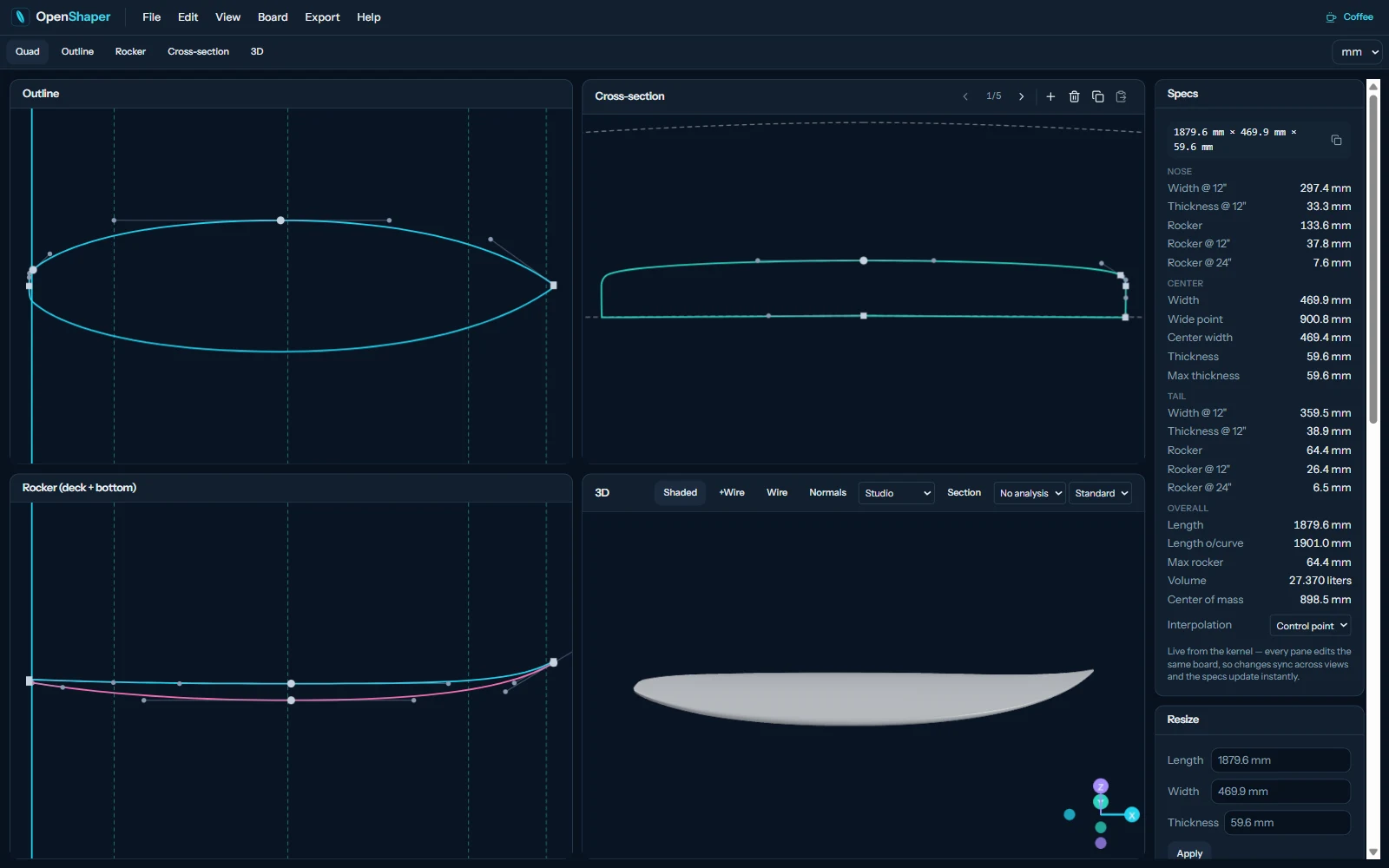
Outline (planshape)
The outline — or planshape — is the board's silhouette seen from above. Its width and where the wide point sits drive paddling, stability and how the board turns. A wider board with more planing area paddles and catches waves more easily; a narrower, drawn-out outline is more responsive and holds better in powerful surf.
The nose matters too: a fuller, rounder nose adds paddle power and float up front, while a pulled-in nose fits steeper wave faces. Move the wide point forward for an easy, drivey feel; move it back for a board that pivots off the tail.
Tail shapes
The tail is the last part of the board the water touches, so its shape decides how water releases and how tightly the board pivots. Corners release flow cleanly for quick, snappy direction changes; curves hold water longer for smoother, drawn-out turns.
- Squash — the all-rounder: a squared-off tail with soft corners, balancing release and hold.
- Round — more curve, more hold; smooth, carving turns.
- Pin — narrow and drawn out for maximum hold in big, powerful surf.
- Swallow — keeps width for small-wave speed while the two points bite like twin pins; the classic fish tail.
- Square — hard corners and full width; skatey, instant release.
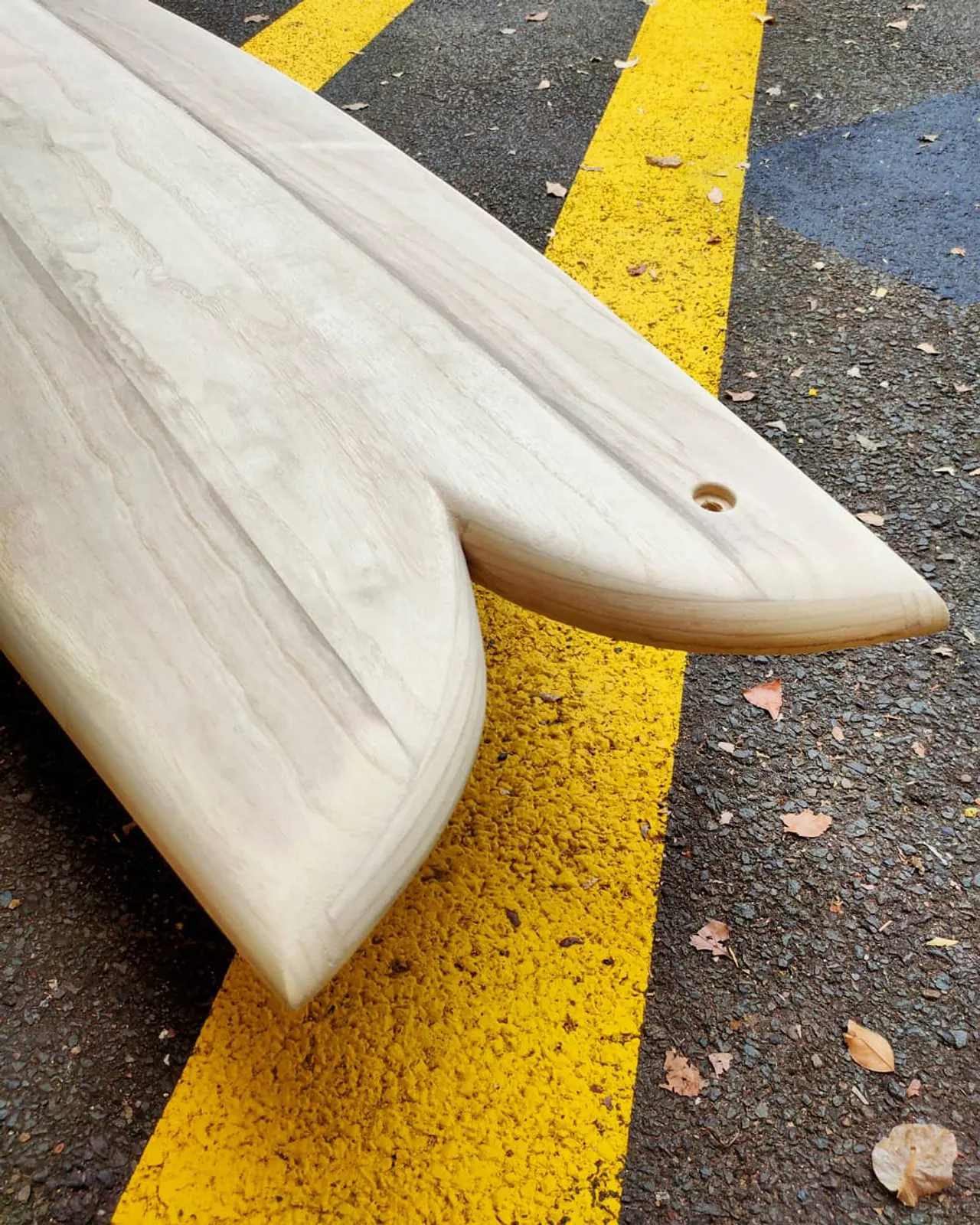
Tail width interacts with everything else: wider tails plane earlier and feel loose, narrower tails hold in when the wave has push. In OpenShaper you can reshape the tail — including swallow and fish cuts — and watch the outline and volume update live.
Rocker
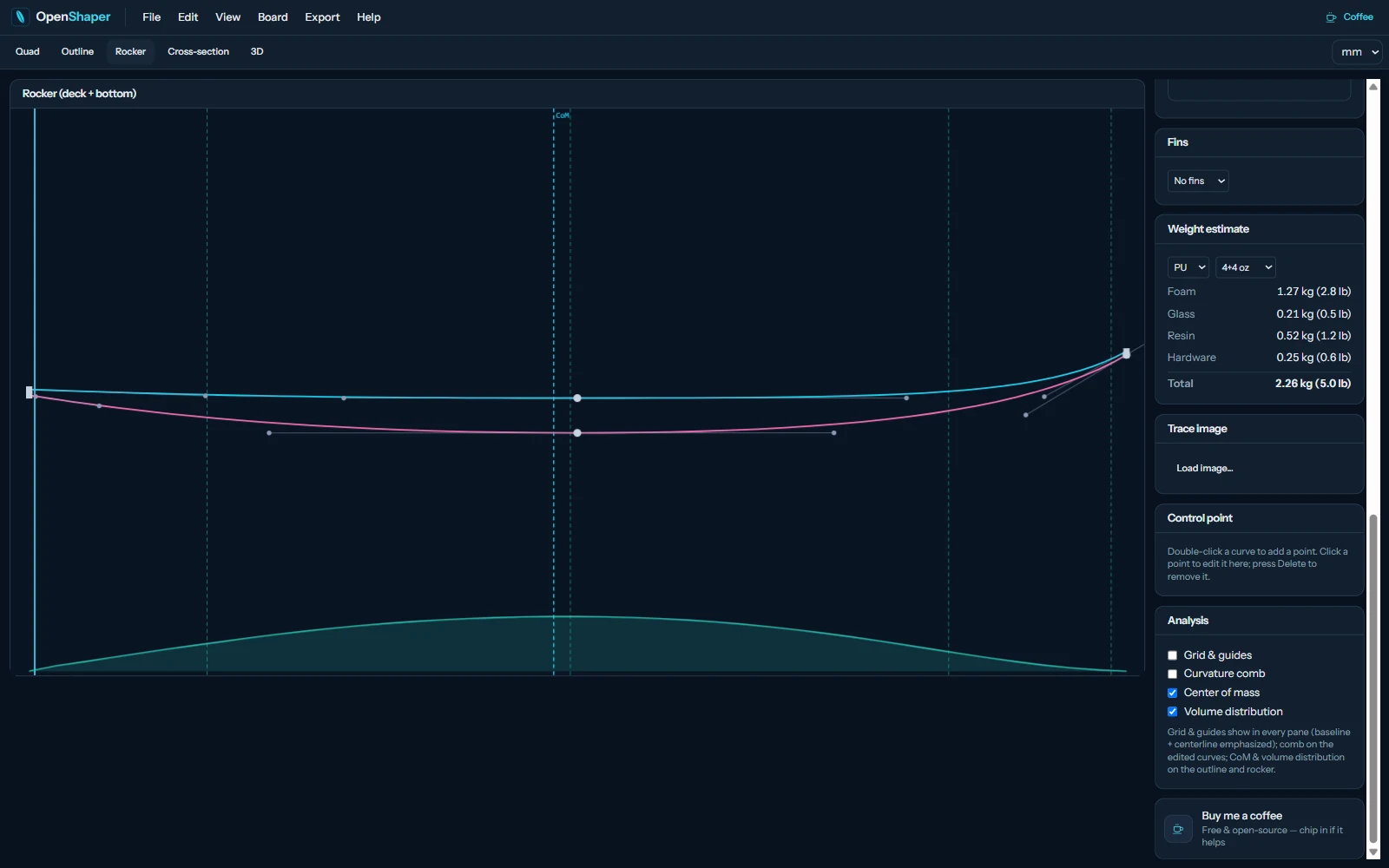
Rocker is the curve from nose to tail viewed side-on, and it's one of the most feel-defining numbers on the board. Nose rocker (entry rocker) governs how the board handles steep drops and chop without pearling; tail rocker (exit rocker) governs how tightly it turns off the tail.
More rocker means tighter turning and better steep-wave control, at the cost of paddle speed and down-the-line drive. A flatter rocker is faster and paddles more easily, ideal for small, weak waves, but can feel stiff and catchy when the wave stands up. Rocker can be continuous (a single smooth arc, predictable and drivey) or staged (flatter through the middle with kick in the tail, for a livelier pivot).
Rails
Rails are the edges where deck meets bottom, and their fullness and shape decide how the board bites or releases. A soft, full (50/50) rail is forgiving and holds the board in the face of the wave — common on longboards and beginner boards. A hard, tucked-under edge (down rail) releases water cleanly for speed and bite, typical toward the tail of performance shortboards.
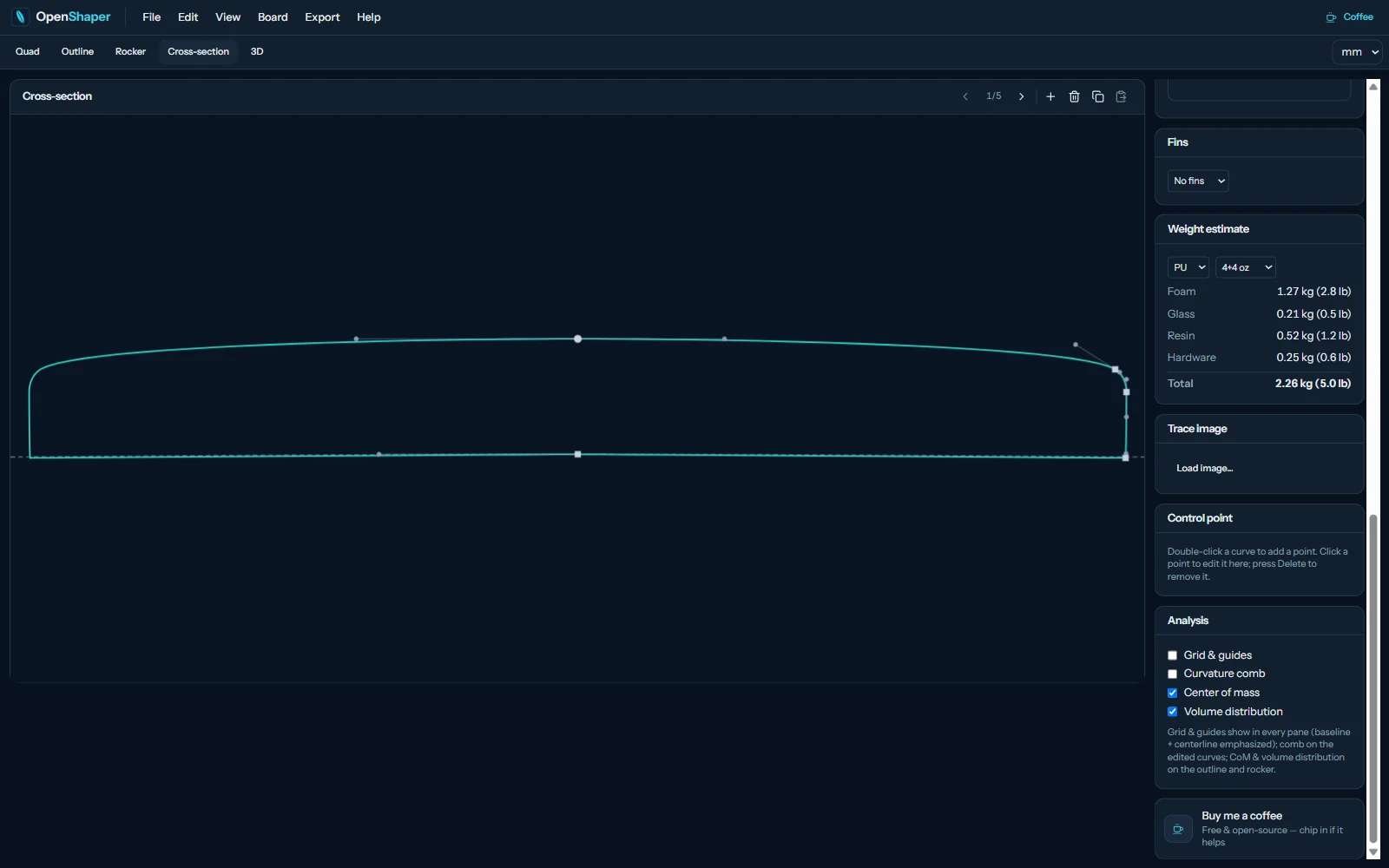
Most boards blend the two: softer and fuller through the nose for forgiveness, harder and lower toward the tail for drive and release. Thinner rails sink and grip in steep waves; fuller rails plane and forgive.
Foil & volume distribution
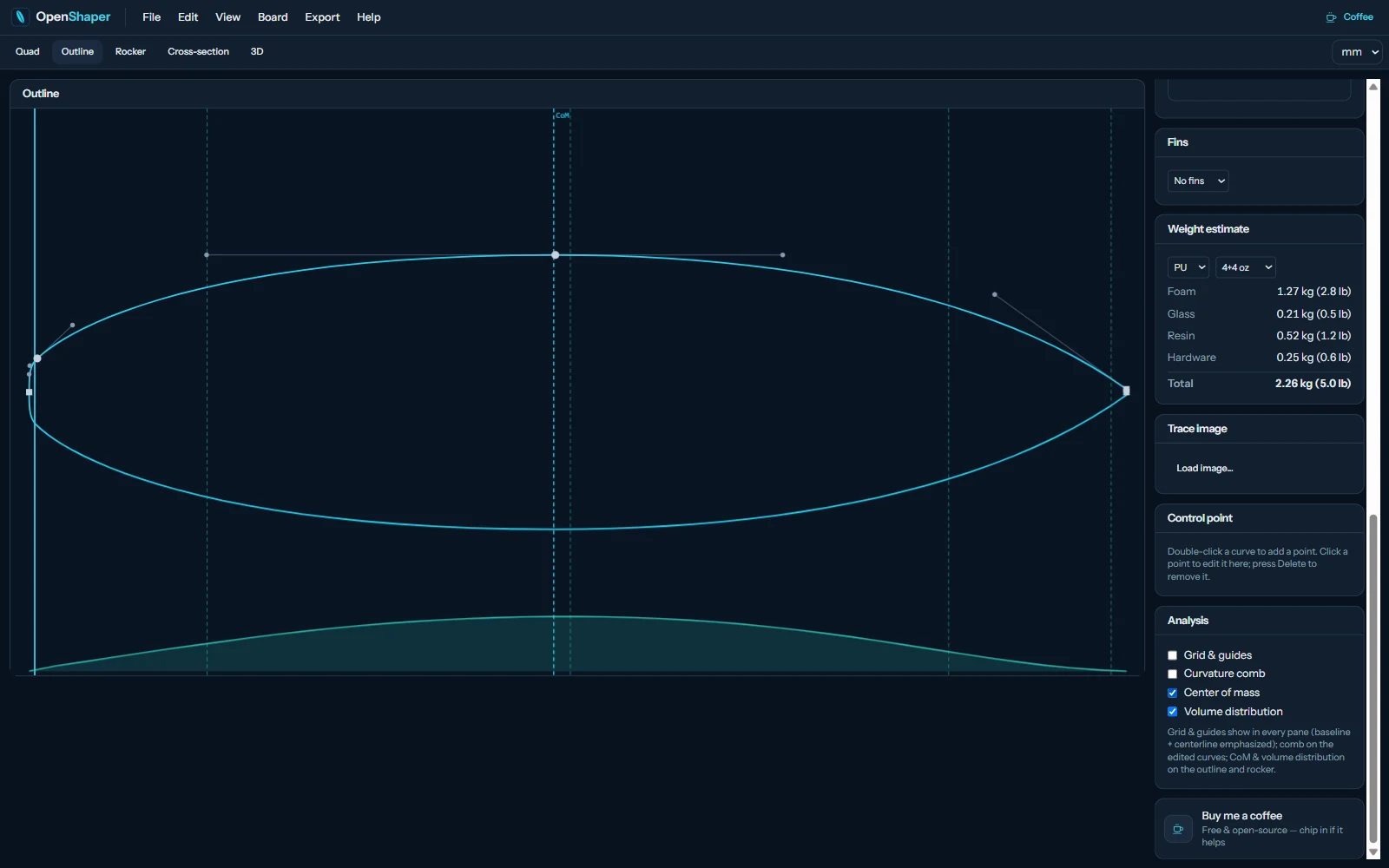
Foil is how thickness flows from nose to tail — the board's profile. It's not just how much volume a board has, but where that volume sits. Volume carried forward helps early paddle entry and small-wave performance; volume kept under the chest with a thinner, foiled-out tail lets a board sink its rail and turn hard.
Thickness through the centre is where most of the float lives, so small changes there move the litres a lot. In OpenShaper the cross-section and rocker views let you shape the foil while the live volume readout tells you what it costs.
Bottom contours
The shape of the underside steers how water flows beneath the board:
- Flat — direct and fast in small waves, simple and lively.
- Single concave — channels water nose-to-tail for lift and straight-line speed.
- Double concave — often set inside a single concave through the tail to add control and rail-to-rail response.
- Vee — makes rolling from rail to rail easier, popular through the tail of all-rounders and longboards.
Many modern boards blend these: single concave up front rolling into vee or double off the tail.
Dimensions & volume (litres)
The three headline numbers — length, width and thickness — combine into volume, measured in litres, which is the single best proxy for how easily a board floats and paddles you. A useful starting point is to scale volume to body weight and ability:
| Ability | Volume factor | 75 kg surfer |
|---|---|---|
| Beginner | 0.9 – 1.0+ × weight (kg) | ~68 – 75 L |
| Intermediate | 0.5 – 0.6 × weight (kg) | ~38 – 45 L |
| Advanced (shortboard) | 0.35 – 0.40 × weight (kg) | ~26 – 30 L |
These are starting points, not rules — wave size and power, fitness and board type all shift them, and many surfers happily ride more volume than the “advanced” row suggests. One nuance: the factors assume a standard PU build. An EPS/epoxy board floats noticeably more for the same litres, so riders often drop 2–3 L when switching — the construction guide covers how the builds differ. For a personalised number, try the surfboard volume calculator. The value of designing your own board is that you can dial litres deliberately instead of guessing; OpenShaper recalculates volume as you shape.
Fin setups
Fins convert the board's shape into hold, drive and release. The common layouts:
- Single fin — smooth, drawn-out turns; classic longboard and retro feel.
- Twin — loose, fast and skatey, especially in small waves and fish.
- Thruster (tri-fin) — the all-round standard: drive, control and predictable release.
- Quad — fast down the line with hold in hollow waves; less pivot than a thruster.
- 2+1 — a centre fin with side bites, common on longboards and mid-lengths.
Fin choice interacts with everything above: a looser tail outline pairs naturally with a thruster or quad, while a drawn-out pin and single fin reward a smoother, more committed turn.
Ready to put it together? Read up on construction methods next, or jump straight into the editor and start shaping.
Frequently asked questions
How much volume (litres) do I need in a surfboard?
What is rocker on a surfboard?
Does a wider surfboard paddle better?
Sources & further reading